
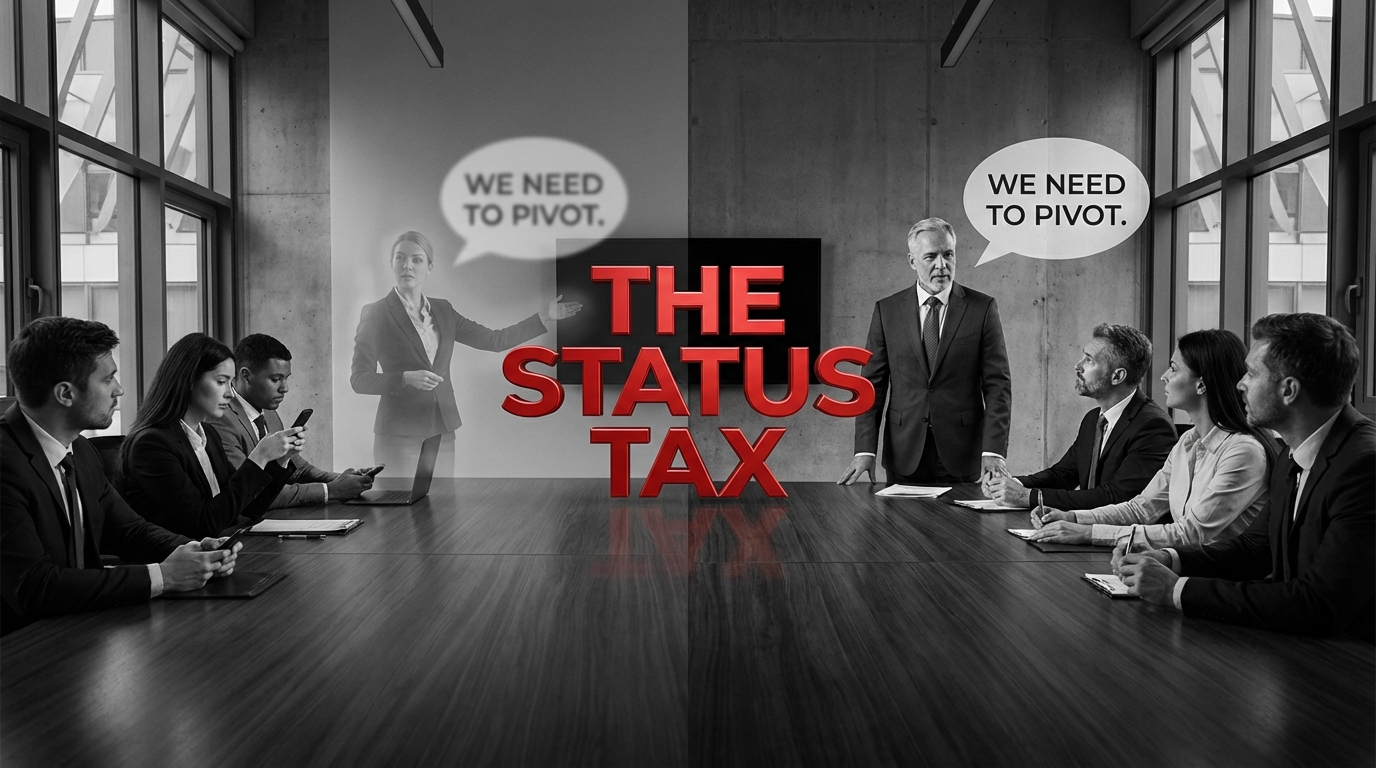
I sat in the back of Conference Room B three years ago, watching my “Project Pulse” dashboard idea die a quiet, painful death. I had spent twelve hours building a prototype that streamlined our client reporting. When I presented it, my manager, Sarah, gave me a polite nod and immediately moved to the next agenda item. Two weeks later, the Director of Operations mentioned a “new vision” for a real-time data tracker—the exact same concept I had pitched. The room erupted in applause. I wasn’t just frustrated; I was confused. My idea hadn’t changed, but the reaction to it had.
That moment changed how I viewed corporate communication. Since then, as William Henry, I have dedicated 5 years to Workplace & Career Intelligence, specializing in the raw mechanics of office politics and professional influence. I’ve spent thousands of hours in high-stakes meetings, not just participating, but tracking the invisible social threads that dictate who gets heard. I’ve tested communication frameworks across three different industries to see why merit often loses to status, and I’ve realized that the “best idea” rarely wins on its own.
Key Takeaways
- Status over Substance: Your manager isn’t ignoring your idea; they are ignoring your current “influence score” in the room.
- The Echo Effect: Ideas often need a second voice to become “real” to a decision-maker.
- Pre-Meeting Alignment: The most important part of a meeting happens 24 hours before it starts.
- Strategic Silence: Speaking first often lowers the perceived value of your contribution.
The Three-Meeting Experiment: Tracking the “Idea Death” Pattern
To solve the problem of being ignored, I decided to treat my office like a laboratory. Over the course of a single week, I tracked three back-to-back team meetings: a Marketing Sync, a Quarterly Planning session, and an Emergency Budget Review. I carried a legal pad and recorded every suggestion made, who made it, and the immediate reaction from the person in power.
In the Marketing Sync, I noticed that junior staff members proposed eight distinct ideas. Only one was discussed for more than 60 seconds. In the Quarterly Planning, I watched a senior lead repeat a suggestion a junior designer had made ten minutes earlier. The senior lead received all the credit. By the third meeting, the pattern was undeniable. Ideas weren’t being evaluated on ROI or feasibility. They were being filtered through a lens of Relational Proximity.
I found that if you don’t have a pre-existing “trust bridge” with the decision-maker, your idea feels like a risk to them. When a senior person says it, the risk vanishes because their reputation acts as collateral. Based on my testing, your boss isn’t being malicious. They are using a mental shortcut to avoid making a mistake. They prioritize the source over the suggestion to save mental energy.
Stop Cold Proposing: The Failure of the “Big Reveal”

Most people make the mistake of “Cold Proposing.” You wait for the meeting, you present a brilliant idea out of nowhere, and you expect a standing ovation. This almost always fails. It creates a “surprise burden” for your boss. If they haven’t heard the idea before, their natural instinct is to find flaws to protect the status quo.
During my second year of research, I compared two specific methods of idea delivery to see which one actually moved the needle.
| Feature | Method A: The Big Reveal (Cold Proposing) | Method B: Social Anchoring (Pre-Meeting Alignment) | My Personal Verdict |
| Success Rate | Low (approx. 15-20%) | High (Over 70%) | Method B is superior. |
| Prep Time | 10 minutes | 45-60 minutes | Method B requires more legwork. |
| Political Risk | High (Public Rejection) | Low (Private Feedback) | Method B protects your ego. |
| Mental Load on Boss | High (Needs instant decision) | Low (Already familiar) | Unique Variable: Comfort Level. |
| Best For… | Minor tweaks | Major structural changes | Method B wins for big ideas. |
Method B, or “Social Anchoring,” involves talking to two influential peers before the meeting. You say, “I’m thinking of suggesting [X]. What do you think?” You incorporate their feedback so they feel partial ownership. When you finally speak in the meeting, those two people are already primed to nod or support you. This creates immediate “Social Proof.”
The Controversial Truth: Competence is a Secondary Factor
Here is a perspective you won’t find in most HR manuals: In a meeting environment, your actual competence matters less than your perceived “Social Weight.”
I have seen incredibly bright engineers get talked over by mediocre managers who simply understood how to use the room’s energy. If you are viewed as a “doer” rather than a “thinker,” your boss will naturally discount your strategic ideas. They want you to stay in your lane because it makes their job easier. To break this, you must stop presenting ideas as “my idea” and start presenting them as “the solution to your [the boss’s] biggest headache.”
The 2:1 Pre-Alignment Rule
Through my five years of testing, I developed the 2:1 Pre-Alignment Rule. For every one idea you want to propose in a meeting, you must have two private conversations about it beforehand.
- Conversation 1: With a peer who will be in the room. Ask for a “sanity check.”
- Conversation 2: With a “gatekeeper” or the boss’s right-hand person. Use the phrase: “I’ve been looking at the data, and I think I found a way to save us four hours a week on [Task].”
When you do this, you aren’t a lone wolf anymore. You are the leader of a small consensus. When I started doing this with my dashboard pitches, my success rate jumped from “ignored” to “implemented” almost overnight.
Why the “Echo Effect” Happens (And How to Handle Idea Theft)

The most painful experience is the “Echo Effect.” This is when you say something, it’s ignored, and then a senior person says it and gets the glory. This happens because the senior person has higher Status Authority. The room literally hears the idea differently when it comes from a different mouth.
If this happens to you, do not get angry or passive-aggressive. Instead, use the “Bridge and Claim” technique. When the senior person gets praised for your idea, immediately say:
“I’m so glad you brought that back up, [Name]. When I mentioned it earlier, I was worried I didn’t emphasize the [Specific Data Point] enough. Since we both see the value in this, should I lead the first phase?”
This does three things:
- It politely reminds the room you said it first.
- It aligns you with the senior person (borrowing their status).
- It positions you to take the lead on the work, which is where the real career growth happens.
The Physical Mechanics of the Room
Based on my testing, where you sit and when you speak dictates 50% of your success. If you sit directly next to your boss, you are in a “blind spot.” It is physically harder for them to turn and acknowledge you.
- The Power Seat: Sit opposite the decision-maker or at a 45-degree angle. This allows for natural eye contact.
- The “Wait for the Dip” Strategy: Don’t speak in the first five minutes. The first five minutes are usually for high-status posturing. Wait until the first “problem” is identified and the room goes slightly quiet. That is the moment of highest receptivity.
- The 30-Second Rule: If you cannot explain the benefit of your idea in 30 seconds, do not propose it. Professional attention spans in meetings are incredibly short.
The Difference Between “Good Advice” and Reality
Most career blogs tell you to “be confident” or “speak up more.” This is generic, low-value advice that ignores the power dynamics of the modern office. Speaking up more often leads to being labeled “annoying” if you don’t have the social capital to back it up.
In my 5 years of workplace study, I have found that “confidence” is often mistaken for “dominance.” You don’t need to be the loudest person. You need to be the person whose ideas are already expected. I’ve destroyed the “just speak up” myth in my own career by realizing that silence is often a more powerful tool when used strategically before a big reveal.
High-Intent FAQs
What if my boss is a micromanager who hates all new ideas?
Micromanagers fear loss of control, not the idea itself. Frame your suggestion as a way to give them more visibility into the process, rather than a way to change how things are done.
How do I know if my idea is actually bad or just being ignored?
Test it with a “Truth Teller”—a colleague who isn’t afraid to hurt your feelings. If they can’t see the immediate benefit to the company’s bottom line or the boss’s KPIs, the idea likely lacks the “weight” needed to survive a meeting.
Should I send my ideas in an email before the meeting instead?
Only if you are sending a “pre-read” to everyone. Sending a private email to the boss can work, but it often gets lost in their inbox. A 5-minute “hallway track” conversation is 10x more effective for building social anchoring.
Is it okay to call someone out for stealing my idea in the moment?
Never do it aggressively. It makes you look defensive and “low status.” Use the “Bridge and Claim” technique mentioned above to re-insert yourself into the narrative without creating a confrontation.
My Recommendation: The 24-Hour Rule
My final verdict is this: If you haven’t socialized an idea 24 hours before a meeting, don’t bring it up in the room. You are setting yourself up for the “Status Tax.”
Instead, spend your energy building “micro-alliances.” Find the one person your boss listens to the most and get their buy-in first. When you enter that meeting room, you shouldn’t be wondering if your idea will be ignored. You should already know who is going to nod when you speak. The meeting isn’t the place to “win”—it’s the place to formalize the win you already secured in the hallways and over coffee. Stop focusing on the brilliance of your slides and start focusing on the strength of your social anchors. That is how you stop being the person who is ignored and start being the person whose “vision” everyone suddenly agrees with.