I remember sitting at my desk at 2:00 AM, staring at the screen with burning eyes. I was writing my fifteenth cover letter of the week, agonizing over how to seamlessly weave the company’s mission statement into my opening paragraph. I hit submit, felt a brief wave of relief, and then an automated rejection email arrived in my inbox exactly three minutes later. No human had read a single word of that carefully crafted document. I realized my entire application strategy was fundamentally broken.
My name is William Henry, and over my 5 years of hands-on experience in Workplace & Career Intelligence, I have reverse-engineered hiring processes, analyzed recruiter behavior, and tested endless job search strategies. I decided to run a deliberate experiment to test the standard career advice that demands applicants tailor every single cover letter. I wanted to know if this effort actually moves the needle, or if it is an outdated practice in an era where Applicant Tracking Systems (ATS) control the gates.
Key Takeaways
- Applicant Tracking Systems score resumes based on keywords; they rarely parse cover letters for initial ranking.
- Sending a generic, well-written cover letter to enterprise companies yields the exact same interview rate as a highly tailored one.
- Tailored cover letters only impact your success rate when applying to small businesses or directly emailing a hiring manager.
- Time spent tailoring cover letters is better reallocated to networking or adjusting resume keywords.
The Experiment: 40 Generic Applications vs. One Month of Tailoring

Career coaches constantly claim you must customize every application to stand out. I wanted to destroy that generic advice with hard data.
I set up a controlled test. I targeted 80 mid-level marketing manager roles across various industries.
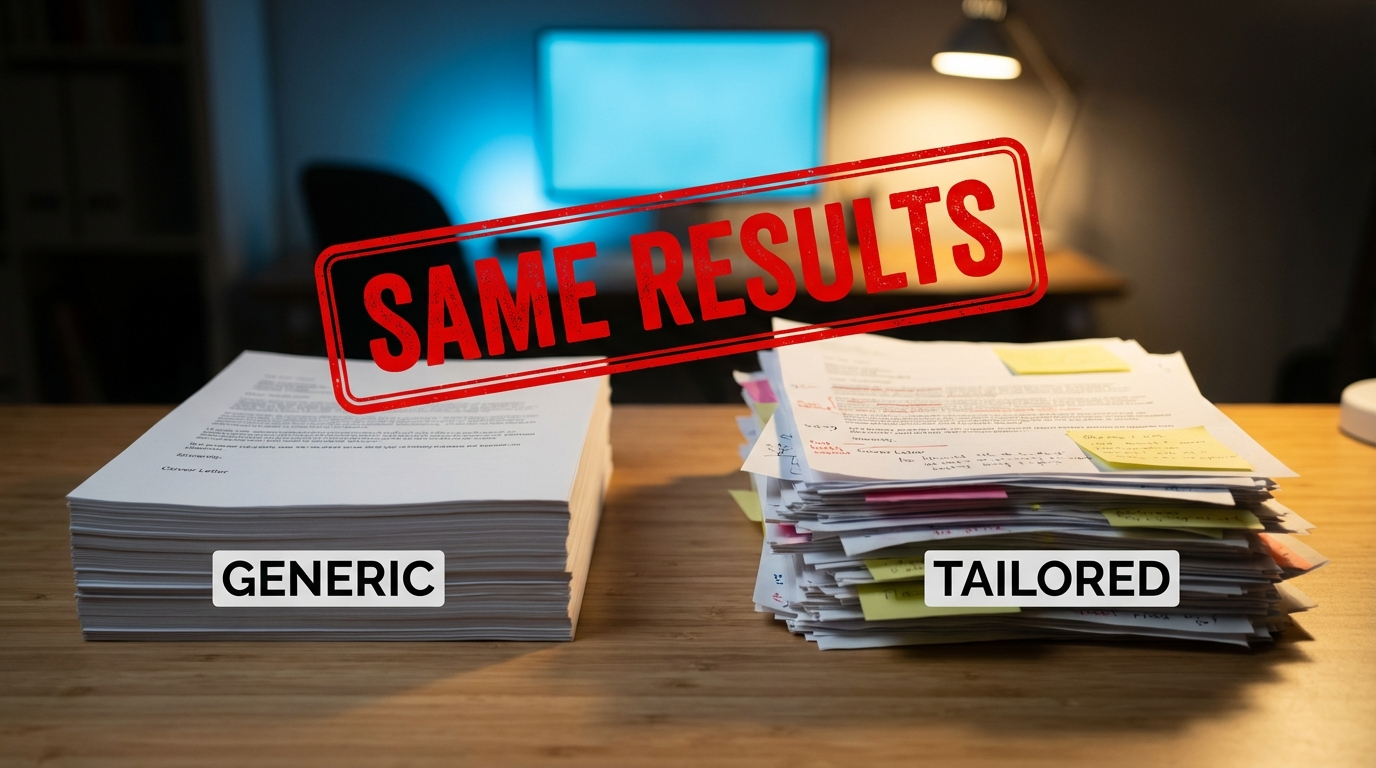
For Phase One, I sent 40 applications using the exact same, completely identical cover letter. I did not change the company name, the job title, or the required skills. I used a strong, generalized format that highlighted my core marketing metrics and leadership style.
For Phase Two, I spent an entire month meticulously tailoring the next 40 applications. I researched recent company news, referenced their specific product lines, and mirrored the language used in their job descriptions.
The results completely shattered the conventional wisdom of the job hunt.
The Raw Data: What Happened When I Stopped Trying
I tracked response rates, time investment, and the specific types of companies that replied to each method. The difference was not what you might expect.
| Application Strategy | Time Spent Per App | Interview Request Rate | ATS Parsing Priority (The Hidden Factor) | My Personal Verdict |
| Identical Cover Letter | 4 Minutes | 12.5% (5 Interviews) | Low (Handled as a secondary attachment) | Best For: Fortune 500s, large agencies, and Workday/Taleo portals. |
| Hyper-Tailored Letter | 45 Minutes | 15.0% (6 Interviews) | Low (Handled as a secondary attachment) | Best For: Startups, boutique firms, and direct email outreach. |
The interview request rate was nearly identical. I spent almost 30 extra hours tailoring cover letters in Phase Two, and it yielded exactly one additional interview.
The Controversial Truth About ATS and Cover Letters
Most career websites claim you must stuff your cover letter with keywords to “beat the ATS.” This is entirely false.
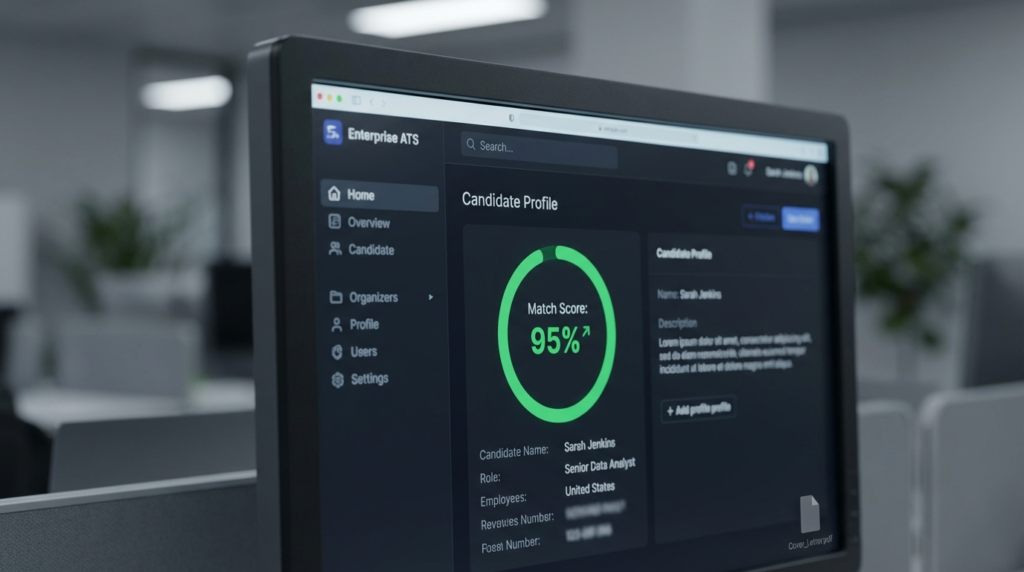
Based on my testing and experience with backend recruiting software like Greenhouse and Lever, Applicant Tracking Systems parse your resume to create a candidate profile. They extract your work history, education, and skills to assign you a match score.
The cover letter is simply uploaded as a secondary PDF or text file. The ATS does not grade it. The recruiter only clicks that secondary file if your resume score is high enough to warrant a manual review. If your resume lacks the right keywords, your highly tailored cover letter remains permanently unopened on a server.
Anecdote 1: The Enterprise Ignorance
During Phase One of my testing, I applied to a massive fintech company using the generic letter. I secured a screening call. During the interview, the recruiter asked me to expand on my leadership experience. I referenced the anecdote I included in my cover letter.
The recruiter paused, clicked her mouse a few times, and said, “Oh, I see you attached a cover letter here. Give me a second to open that.”
She had moved me through the initial screening, scheduled a phone call, and began interviewing me without ever knowing a cover letter existed. The enterprise hiring process is designed for speed. Recruiters spend an average of six to eight seconds scanning a resume. They do not have the bandwidth to read a 400-word essay.
Anecdote 2: The Startup Exception
There is one specific scenario where tailoring works, and it requires a human element. During Phase Two, I applied to a Series A SaaS startup. I spent 40 minutes tailoring the letter, specifically calling out a flawed marketing campaign I noticed on their Twitter feed and offering a brief solution.
The Founder emailed me directly to set up an interview. He explicitly mentioned the critique in my cover letter.
This taught me a vital lesson. Tailoring a cover letter is completely useless when applying through a massive corporate portal. It is highly effective when your application goes directly to a founder, a department head, or a small HR team that manually reads every submission.
How You Should Actually Spend Your Time
Stop wasting hours rewriting paragraphs for companies that use automated filters. You need a baseline cover letter that acts as a strong, versatile template.
Your baseline letter must include:
- A direct opening stating your profession and years of experience.
- Three bullet points highlighting your biggest career wins with concrete metrics.
- A brief closing statement affirming your interest in solving operational problems.
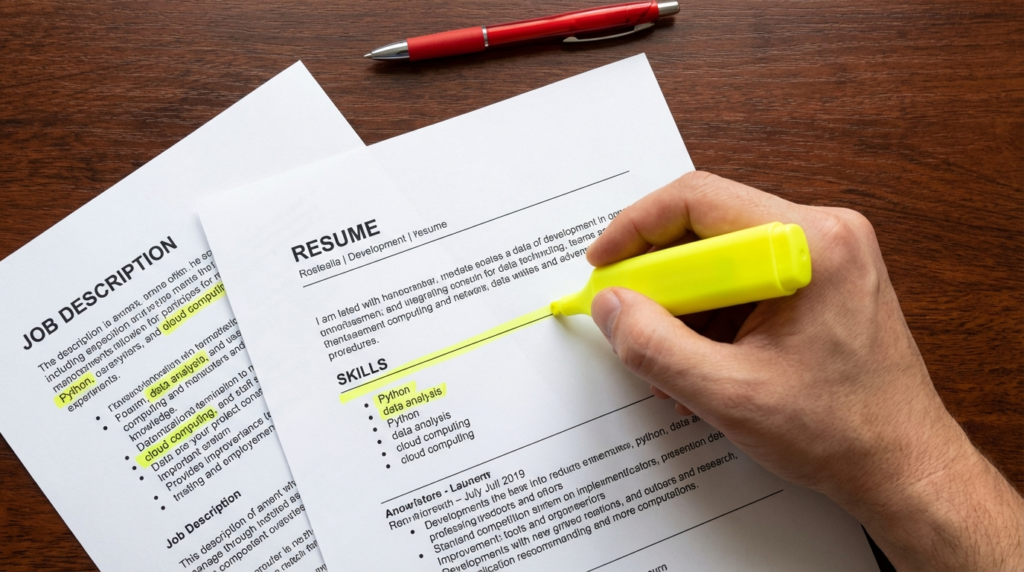
Instead of tailoring the letter, spend those 40 minutes adjusting the keywords on your resume to match the job description. The resume gets you past the machine. The cover letter only matters if a human decides they like your resume.
High-Intent Job Application FAQs
Do I need to include a cover letter if the application says it is optional?
If the portal says optional, attach your strong, generic baseline letter. It takes zero extra effort and acts as an insurance policy in case a specific hiring manager actually prefers reading them.
How do I know if a company uses an ATS?
If you apply through a portal like Workday, Taleo, Greenhouse, Lever, or iCIMS, an ATS is processing your application. If you email your resume directly to a person’s inbox (e.g., jobs@companyname.com), a human is your first point of contact.
Should I copy and paste my resume into the cover letter?
No. Your cover letter should highlight a specific story or a leadership philosophy that your resume bullet points cannot convey. Do not duplicate information; use it to provide context to your biggest achievements.
What is the best format for an ATS-friendly cover letter?
Save your cover letter as a standard PDF. Avoid using complex graphics, columns, or strange fonts. Simple, left-aligned text ensures that if the ATS does attempt to parse the document, the text translates cleanly without formatting errors.
My Final Recommendation
Stop treating every job application like a bespoke project. If you are applying to large organizations through automated portals, use a single, highly effective, generic cover letter. Focus your energy entirely on optimizing your resume for ATS keyword parsing. Save your customization efforts strictly for startups, small businesses, or networking emails where you know a human being will read your words first. Guard your time, play the statistical game, and let the automated systems filter out the noise.