Fourteen months ago, I hit a frustrating wall. I worked entirely remote on a hybrid team, while my direct peer worked three days a week in the office. When performance reviews rolled around, I compared our feedback. I had closed more support tickets, shipped more code updates, and hit every stated quarterly goal. Yet, my manager gave my in-office peer the “exceeds expectations” rating while I received a standard “meets expectations.” The manager praised my peer for his “constant presence” and “driving team culture.” I realized right then that my hard numbers were losing a rigged game against physical visibility.
I needed to understand what middle managers were actually measuring behind closed doors. As William Henry, I have spent the last five years working in Workplace and Career Intelligence, diagnosing exactly these types of structural team failures. I analyze how corporate policies translate into actual management behavior. My goal here is to break down the gap between the productivity metrics companies claim to care about and the invisible proximity metrics managers actually reward.
Key Takeaways
- Middle managers often substitute physical presence for actual performance tracking.
- Standard career advice about hitting your targets fails when competing against office visibility bias.
- “Collaboration” is frequently used as a code word for immediate, physical availability.
- Remote workers must actively manufacture visibility to counter organic office interactions.
The Stated Metrics vs. The Real Metrics
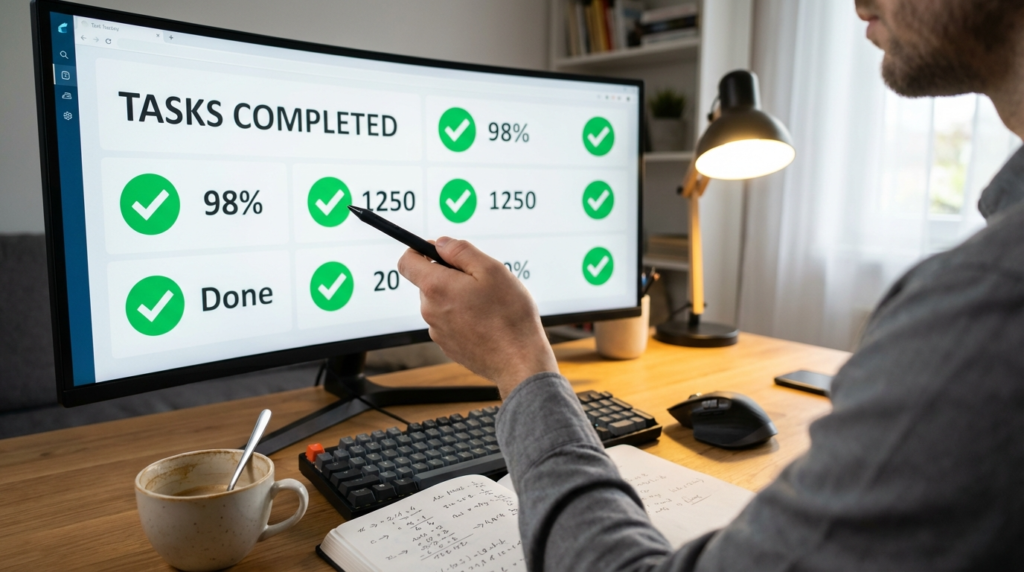
Read almost any mainstream career blog, and they tell you the same thing. They claim you just need to focus on your key performance indicators (KPIs). They argue that results speak for themselves. I am here to tell you that this advice is completely wrong. It ignores human psychology.
Middle managers are overwhelmed. They rarely have the time to do deep, forensic analysis of every team member’s actual output. Instead, they default to the path of least resistance: feelings and proximity. If an HR department says you are graded on project completion, your manager is actually grading you on how often they see you working on that project.
I experienced this directly during my 14-month hybrid team stint. My in-office peer and I had the exact same job description. We used Jira to track our workload. I relied on the Jira dashboard to speak for my productivity. I moved tickets from “In Progress” to “Done.” My peer, however, would casually mention his tickets to our manager while getting coffee.
When review time came, my manager told me I was “reliable.” He told my peer he was “highly proactive.” The manager interpreted my silent, efficient work as baseline expectation. He interpreted my peer’s vocal, visible work as exceptional effort. The real metric was not task completion. The real metric was management reassurance.
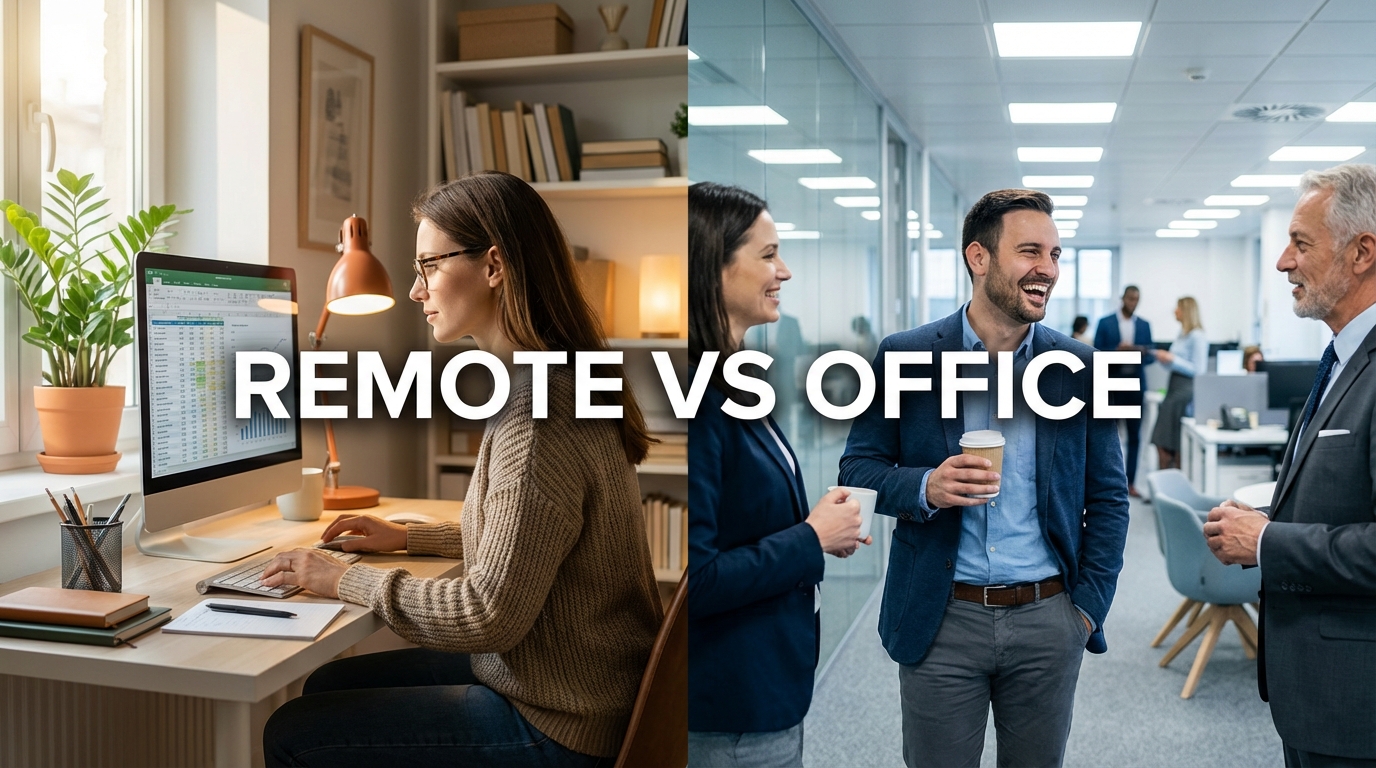
We can see exactly how this breaks down when we compare the two environments. I built this framework to evaluate how management perception shifts based on location.
| Measurement Area | Remote Reality | Office Reality | Unspoken Manager Expectation | My Personal Verdict |
| Problem Solving | Researching independently, fixing the issue, sending a slack update. | Asking the manager a quick question over the desk partition. | Prefers to be consulted early rather than surprised by a finished task. | Office workers win by making the manager feel essential to the process. |
| Availability | Replying to emails within 30 minutes. | Sitting at a desk where the manager can see the monitor. | Immediate physical availability equals high engagement. | Remote workers must mimic this with instant Slack/Teams replies. |
| Team Contribution | Creating detailed documentation for the whole team to use. | Chatting about weekend plans in the hallway. | Values social friction and small talk as “culture fit.” | Remote documentation is more valuable, but office chatting is rewarded higher. |
| Handling Mistakes | Writing a post-mortem document explaining the error and the fix. | Apologizing in person immediately after the error. | Wants immediate emotional validation that the worker cares. | Office apologies clear the air faster; remote fixes often feel cold. |
The Controversial Truth About “Collaboration”
Here is a reality that most corporate leadership refuses to admit. When middle managers complain that remote work ruins “collaboration,” they are usually not talking about brainstorming sessions or white-boarding. They are talking about convenient interruption.
During my time on the hybrid team, my manager frequently praised the in-office staff for their collaborative spirit. I looked closely at what that actually meant. It meant my manager could walk up to someone’s desk and interrupt their workflow to ask a minor question without scheduling a meeting.
This is the hidden metric. Managers measure how easily they can interrupt you. They confuse their own convenience with your productivity. If you are remote, interrupting you requires effort. They have to type a message or schedule a call. Because it is harder for them to interrupt you, they subconsciously label you as less collaborative.
Decoding Performance Review Language
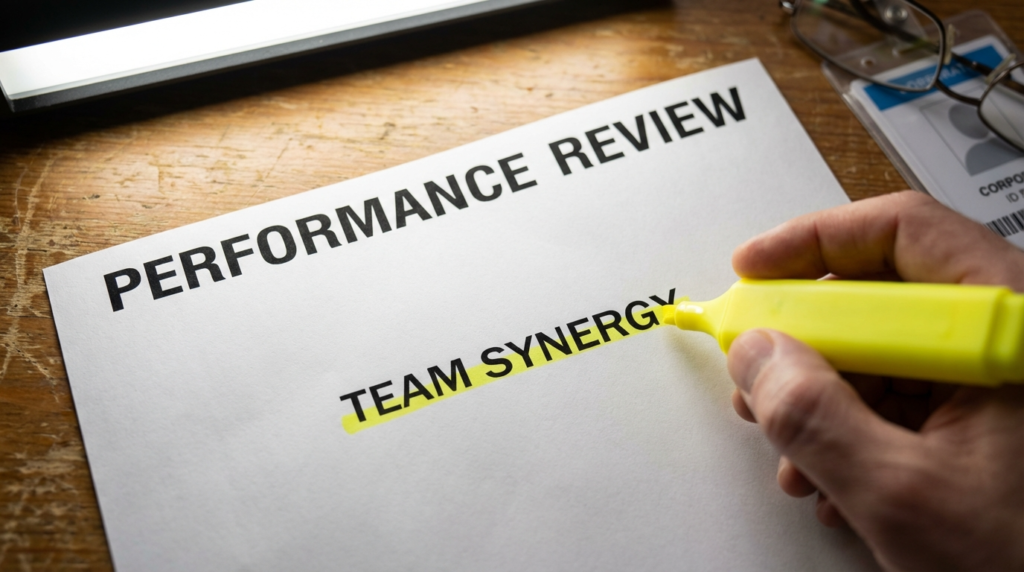
You can identify this bias by looking at the specific language used in your performance reviews. Managers rarely say, “I reward people I see.” They use corporate code words to justify proximity bias.
I compared the specific phrases used in my review against my in-office peer’s review. The differences were clear and deeply frustrating.
- “Seen as a leader” vs. “Consistent performer.” My peer was “seen as a leader” because he physically led meetings in the conference room. I was a “consistent performer” because I managed the project timeline perfectly from my home office.
- “Drives team synergy” vs. “Completes assigned tasks.” Synergy is a meaningless word used to describe people laughing in the breakroom. I completed the tasks that kept the department running, but I lacked the physical presence to generate “synergy.”
- “Highly visible impact” vs. “Solid background contribution.” This is the most direct admission of proximity bias. If your impact happens on a server or in a spreadsheet, it is background. If it happens in front of the manager’s face, it is highly visible.
You cannot fight this bias with logic alone. Showing your manager a spreadsheet of your completed tasks will not change their emotional perception of your work. You have to change how they experience your work.
How to Manufacture Visibility

Since you cannot rely on the quality of your work to speak for itself, you must become your own public relations department. You need to create artificial visibility that mimics the organic interactions of the office.
First, over-communicate your process, not just your results. Do not wait until a project is finished to show it off. When I finally understood the game, I started sending my manager mid-week updates. I would send a quick message saying, “Just hit a milestone on the Johnson account, attaching the draft here if you want an early look.” I was creating the digital equivalent of stopping by their desk.
Second, respond to direct messages immediately. This is the remote worker’s version of sitting upright at your desk. I found that replying to a message from my manager within two minutes did more for my reputation than staying online an extra two hours at night. It signals that you are alert and engaged.
Third, ask questions you already know the answer to. This sounds counterproductive, but it works. Office workers constantly ask minor questions to validate their manager’s authority. Remote workers tend to figure things out independently. Stop doing that. Once a week, ask your manager for their opinion on a low-stakes decision. It makes them feel involved in your daily process.
FAQs
How do I prove my productivity if my company does not use tracking software?
You have to build your own paper trail. Send a brief bulleted list every Friday morning outlining exactly what you completed that week and what you are prioritizing next week.
Why does my manager ignore my daily status reports?
Your reports are likely too dense and focused purely on tasks. Managers skim for risks and wins; restructure your updates to highlight immediate impacts and potential roadblocks.
Can I get promoted while staying fully remote?
Yes, but you have to actively manage your internal network. You must schedule recurring 1-on-1 virtual coffees with leaders outside your direct reporting line to build reputation capital.
How do I counter the “culture fit” argument in my review?
Ask for specific, behavioral examples of what ideal culture fit looks like on the team. Force the manager to translate vague feelings into actionable metrics you can actually hit.
My Recommendation
You cannot ignore the reality of proximity bias. If you are a remote worker on a hybrid team, you are operating at a structural disadvantage. Do not waste your energy being angry that your manager prefers the people they see every day. Accept the landscape for what it is.
Your actual output is only half your job. The other half is managing the perception of your output. Stop relying on dashboards to tell your story. Start treating your manager as a client who needs constant reassurance. Manufacture your visibility through strategic updates, rapid response times, and vocal participation in virtual meetings. You must learn to play the visibility game on your own terms.